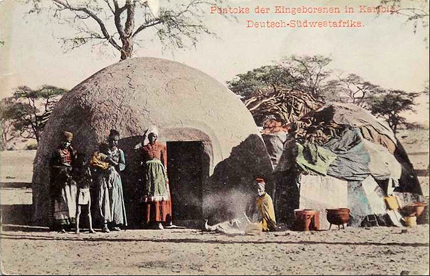
 The town of Karibib originated as a watering point for the Herero people known as Otjandjomboimwe.
This watering point and adjoining land was bought from Herero headman Zacharias Zeraua, by Eduard Hälbich,
a merchant from Otjimbingwe. According to legend Hälbich realised the business potential of the site arising
from the railway construction work being undertaken between Swakopmund and Windhoek (Wikipedia, 2015).
The town of Karibib originated as a watering point for the Herero people known as Otjandjomboimwe.
This watering point and adjoining land was bought from Herero headman Zacharias Zeraua, by Eduard Hälbich,
a merchant from Otjimbingwe. According to legend Hälbich realised the business potential of the site arising
from the railway construction work being undertaken between Swakopmund and Windhoek (Wikipedia, 2015).
The construction of the railway line to Swakopmund and the railway station in Karibib kick-started the
town with the first train arriving from Swakopmund in Karibib on 1 June 1900. As the construction of
the railway line progressed towards Windhoek, so did the role of Karibib, as the workers moved with the
construction of the railway line.
In 1904, with the Herero war, the town received a second growth spurt with the German troops being ferried via the railway line and the towns importance as a military hub grew. This then led to Karibib being upgraded to a county, of which its governance was expanded to include the district of Omaruru and it was declared as a Municipality in 1909 with Eduard Hälbich as the first mayor.
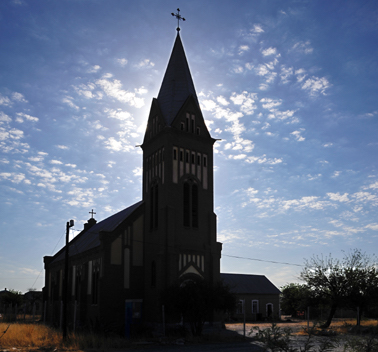 The role of the town became that of a trading post, water point and small service centre that served the farmers in the surrounding areas. The construction of the Karibib Privatschule in 1907 is also believed by many to have attracted people to the town due to its academic excellence at that time. The school closed down in 1986 and is now the home of the Karibib Private School.
The finding of gold, marble and granite in the surroundings of town further contributed to the economic livelihood of the town. Over the years, the economy of the town became more focused on mining than service delivery. With the rise of modern vehicles the role of the town of Karibib as a service centre diminished to that of a fuel stop for passing travelers on their way to the coast, Windhoek or the north.

+264 (064) 550 008
+264 81 298 3226
+264 81 422 1805
+264 81 300 9274
+264 81 231 1122
+264 81 882 8119
Please visit us and enjoy, Our Site.